Bedding guide
How to Compare Wool Comforters for Temperature and Care
A wool comforter is more than a layer of insulation. Its fill weight, outer fabric, construction and care instructions all shape how it feels through the night—and how practical it is to live with. Compare those details carefully, and you can choose bedding that suits your room, your sleep habits and your willingness to maintain it.
Comfort is a small negotiation with the climate around you. A bedroom cools as evening settles; a duvet holds warmth close; a sleeper may welcome that cocoon at midnight and push it away before dawn. Wool is often chosen for its ability to provide warmth while managing moisture, but the word “wool” alone does not tell you how a comforter will perform. Two comforters made with wool can feel notably different because their fill weight, cover fabric, quilting and intended season are not the same.
That is why a useful comparison begins with the whole object, not a single label. Ask how much wool is inside, what surrounds it, how the fill is held in place and what the maker recommends for cleaning. Then relate those details to your own room and routine. A warm, substantial comforter may suit a chilly bedroom, while a lighter one may be more comfortable in a centrally heated home or during warmer months.
This guide explains the main features to examine when comparing wool comforters, including organic wool, cotton covers and practical care. The aim is not to identify one universal best choice. It is to help you understand what the specifications can—and cannot—tell you.
Start with fill weight, not just fibre content
Fibre content identifies the material, but fill weight gives a more direct clue to the amount of insulation in a comforter. A higher quantity of wool per area may create a warmer, heavier layer, while a lighter fill can be better suited to mild conditions or people who prefer less bedding. The precise relationship depends on the comforter’s construction, the type and arrangement of the fill, and the fabric surrounding it.
Look for a stated fill weight or a clear description of the comforter’s intended use, such as lightweight, three-season or winter-weight. If the product information provides only general phrases like “all-season” or “temperature regulating,” treat them as a starting point rather than a measurement. These labels can be useful, but they do not describe every bedroom’s temperature or every sleeper’s comfort threshold.
When figures are available, check what they refer to. A fill weight may be expressed for the whole comforter or per unit of area; those values cannot be compared directly without knowing the units and dimensions. If two products use different measurement systems, convert them to a common basis before drawing conclusions. Also compare like with like: a larger comforter will naturally contain more filling than a smaller one.
For a concrete example of the information worth checking, the Sleep & Beyond myMerino lightweight comforter is described as hand-filled with organic superfine merino wool and intended as a lighter-weight option for three seasons. Its product information lists a wool fill weight of six ounces per square yard. That measurement offers a useful point of comparison, but it should be considered alongside size, cover construction and the manufacturer’s care advice—not treated as a guarantee of how warm it will feel in every home.
Consider your room and your own sleeping temperature
A comforter does not work in isolation. It sits within a system that includes the room’s heating, mattress, sheets, duvet cover and any additional blankets. A well-insulated bedroom may call for a lighter comforter than a draughty room, even if both are in the same part of the country. Likewise, someone who tends to feel warm at night may prefer a different weight from someone who is often cold.
Think about the conditions you actually experience. Is the bedroom warm and stable through winter, or does its temperature drop overnight? Do you sleep under a duvet cover, and does that cover feel airy or substantial? Are you choosing one comforter for most of the year, or do you have space to store a seasonal alternative? These everyday questions make product descriptions more meaningful.
- For a warm bedroom: investigate lighter fill weights and options described for warmer seasons or three-season use.
- For a cool room: compare more substantial fill specifications, while checking that the comforter will not feel excessively heavy or warm to you.
- For changing conditions: consider whether a moderate-weight comforter can be adjusted with sheets or an additional blanket as the seasons shift.
- For uncertain preferences: prioritise clear specifications and a care policy you understand, rather than relying on vague claims of universal comfort.
“Temperature regulation” is often used to describe wool bedding. It is best understood as a material quality that may support comfortable use, not as an automatic thermostat. A comforter cannot set a fixed temperature or overcome every factor in a bedroom. The experience depends on the sleeper, the construction and the surrounding layers.
Read the cover and construction details
The outer cover is the boundary between the fill and the rest of the bed. Cotton is commonly used because it makes a familiar, woven shell; the feel and performance still depend on the cotton, weave and finish. A tightly constructed cover can help contain the filling, while the tactile surface may range from crisp and smooth to soft and brushed.
Check whether the cover is cotton, what the product says about its finish and whether it is described as washable. Do not assume that a cotton shell makes the entire comforter machine-washable. Cleaning instructions apply to the finished item, including its filling and seams, rather than to the cover material alone.
Construction matters, too. Quilting or other stitching can help keep filling distributed, although the precise design differs between products. Examine product descriptions for details on how the fill is secured and whether the comforter is designed to be used inside a removable duvet cover. A cover can shield bedding from routine soil and reduce the need for frequent cleaning, but it does not replace the maker’s instructions.
For wool comforters, practical comparison means looking at four pieces of information together: the fibre inside, the fabric outside, the method of construction and the recommended care. If one of these is missing, avoid filling the gap with assumptions. Ask the manufacturer or retailer for clarification, especially before buying an item that is difficult to clean.
Organic wool and what sourcing claims mean
Some comforters specify organic wool, sometimes alongside an organic cotton cover. Such descriptions can be important to buyers who want to understand how materials were produced. Still, a fibre claim should be read as one part of a broader account of the item. Check whether the product names a certification, identifies the scope of that certification and explains which components it covers.
For example, a certification may apply to particular fibres or stages of production rather than to every part of a finished comforter. A meaningful comparison therefore asks what is certified, by whom and according to which standard. If the listing offers a named certification, look for its full name and details rather than relying only on a general sustainability statement.
Traceability and sourcing information can also help build a clearer picture. Useful details may include the origin of the wool, the place where the comforter is made, and whether the maker explains its supply chain. No single label tells the complete story of environmental or animal-welfare impacts, but specific, verifiable information is more informative than broad language without supporting detail.
For a neutral comparison, separate material facts from marketing language. “Organic wool” describes a sourcing claim; “luxurious,” “pure” or “naturally perfect” are evaluative words. Give priority to composition, fill weight, dimensions, construction, origin and documented certifications. Those are details you can compare across listings.
Care can matter as much as warmth
A comforter may spend most of its life protected by a duvet cover, but it still needs a care plan. Wool-filled bedding is not automatically suitable for an ordinary wash cycle. The structure can be affected by unsuitable washing, heat or drying, so follow the specific manufacturer’s instructions for the finished product.
Before choosing, find out what the maker recommends for routine airing, small marks and more substantial cleaning. Some bedding may be spot-cleaned, while more serious cleaning may call for professional service. If the label advises professional cleaning, factor in the time and cost involved. A comforter that suits your temperature preferences may still be a poor fit if its upkeep does not work with your household routine.
Air a comforter as directed and allow it to dry fully if it becomes damp. For minor marks, do not improvise with strong products or soak the fill unless the manufacturer explicitly permits it. Cleaning methods that seem convenient for sheets may not be appropriate for a wool-filled article. When instructions are unclear, seek advice before applying water or detergent.
Storage deserves the same care. Make sure the comforter is clean and thoroughly dry before putting it away, and follow any advice about protecting it from pests. Avoid compressing it for long periods unless the maker says this is suitable. Good storage helps preserve the comforter’s shape and reduces the chance of returning to bedding that smells musty or has been damaged.
A practical comparison checklist
When two wool comforters appear similar, put their specifications side by side. Record the information in a simple table or notes app, and mark anything the listing does not state. A gap in the information is useful to know: it tells you which question to ask before deciding.
- Filling: Is the comforter wool, and does the listing identify the type or source of wool?
- Fill weight: Is a weight given? Does it refer to the whole comforter or to a specified area?
- Season and use: Is it described as lightweight, three-season or intended for colder conditions?
- Cover: What is the outer fabric, and is any weave or finish described?
- Construction: How is the fill held in place, and is a duvet cover recommended?
- Dimensions: Will the comforter provide adequate coverage for the bed and sleepers?
- Care: What does the maker say about airing, spot cleaning and professional cleaning?
- Origin and standards: Are manufacturing location, sourcing details or certifications clearly identified?
- Household fit: Can you accommodate its care and storage needs over time?
Pay particular attention to the first three points when warmth is your main concern, and to the care instructions when everyday maintenance is the priority. If a listing provides a detailed description but no measurable fill information, it may still be worth considering—but you will have less concrete evidence for comparing its warmth with another option.
Separate comforters from blankets and throws
Product terminology can blur the distinction between a comforter, blanket and throw. In everyday speech, people sometimes use these words loosely, but they refer to different kinds of bedding. A comforter is generally a filled bed covering, while a blanket or throw is usually a single layer of woven or knitted fabric. Their weight figures, construction and care needs are not directly interchangeable.
This matters when browsing wool bedding. A wool blanket can be an extra layer beneath or over a comforter, but its fibre percentage or fabric weight does not tell you how much filling a comforter contains. Compare like with like, and make sure you are reading the specifications for the kind of bed covering you intend to use.
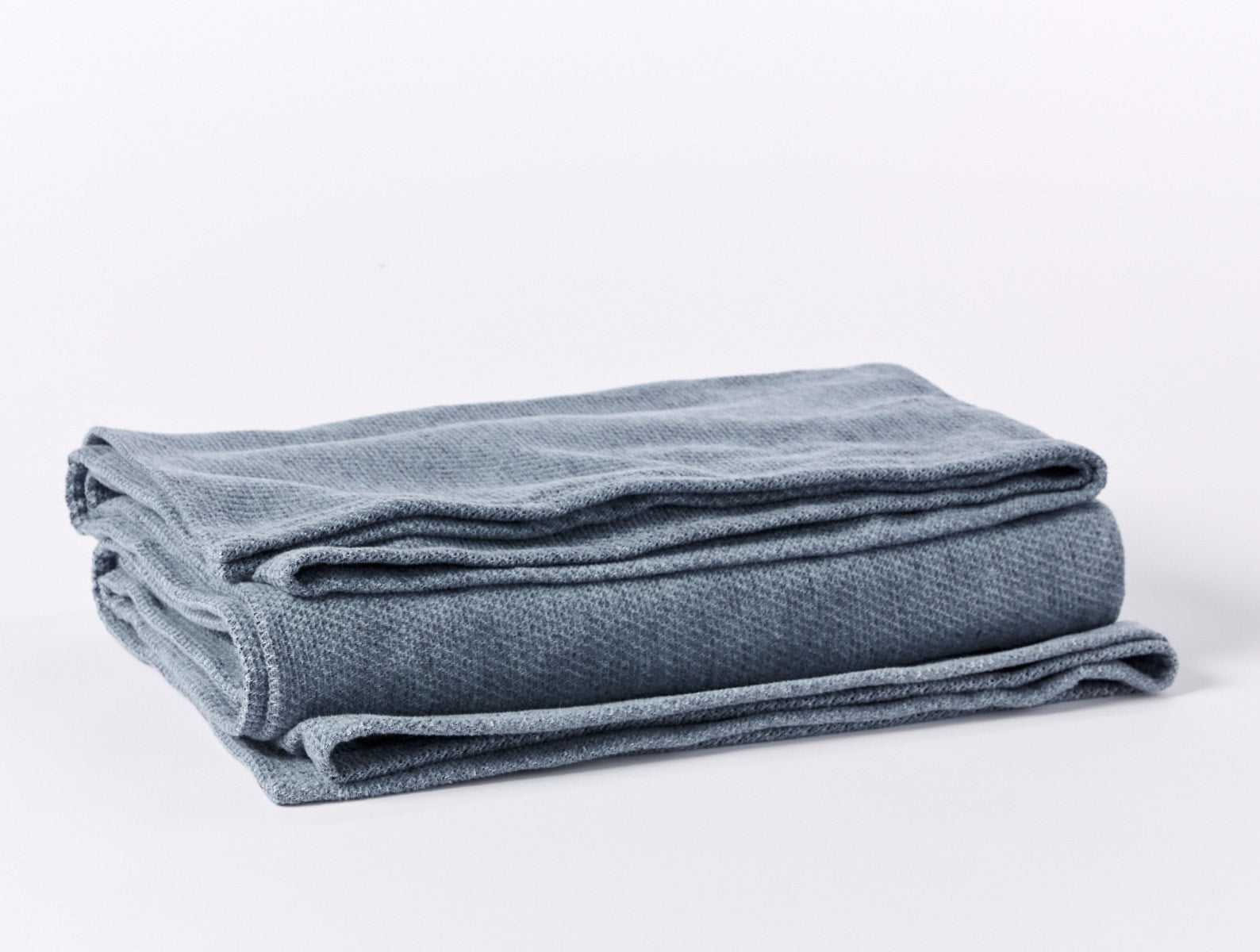
If you are considering a separate layer to adjust warmth, pay attention to its material and care requirements as well. For instance, the Sequoia washable organic cotton and wool blanket is listed as a woven blanket made from 70% organic cotton and 30% organic wool, with a weight of 335 grams per square metre and machine-wash care instructions. Those details describe a blanket, not a wool-filled comforter; they may help assess it as a layer, but they should not be used to infer comforter fill weight or warmth.
Common comparison mistakes
Choosing by fibre name alone. Wool tells you something about the material, but not how much is used, how it is arranged or how warm the finished comforter will feel.
Treating “all-season” as a precise rating. This phrase does not set a universal temperature range. Check fill specifications and consider your room and sleep habits.
Assuming a natural fibre is easy-care. Material origin does not determine whether a finished comforter can be washed at home. The care label does.
Comparing totals without considering size. A larger item may contain more fill simply because it covers a larger area. Compare weight on a consistent basis where possible.
Ignoring the cover. The shell contributes to feel and durability, and its cleaning requirements may affect the whole item’s care routine.
Expecting a claim to replace a specification. Words such as “breathable” and “temperature regulating” can describe intended qualities, but they do not replace measurable information or the maker’s practical guidance.
Making a decision that fits your home
The most suitable wool comforter is the one whose warmth, construction and maintenance fit the conditions in which you will use it. Start with your bedroom: consider how cold it gets, how much heating you use and whether temperatures fluctuate overnight. Then consider yourself: do you generally seek a heavier layer, or do you prefer bedding that feels lighter? Finally, check whether the care routine is realistic for your household.
As you compare options, look for a clear description of the fill and its weight, a named cover fabric, dimensions, construction details and direct care guidance. Treat season labels and comfort claims as helpful context, not as substitutes for those facts. Where a listing identifies organic materials or certifications, verify what the claim covers rather than assuming it applies to every component.
Wool comforters can offer a distinctive kind of bedding: warm, soft and suited to layering, with the experience shaped by more than the fibre itself. Reading the label with care brings the hidden architecture of the bed into view—the wool held within, the cloth that contains it, the stitches that organise it and the instructions that help it last. That knowledge makes a comparison more grounded, and a choice more likely to feel right long after the first night.
Quick answers
Does a heavier wool comforter always feel warmer?
A greater fill weight can indicate more insulation, but warmth also depends on construction, size, cover fabric, room conditions and personal preference. Compare weights on the same basis and look at the manufacturer’s intended-use guidance.
Can I machine-wash a wool comforter?
Do not assume that you can. Follow the care label for the specific comforter. Some products require spot cleaning or professional cleaning, and a cotton cover does not automatically make the filled item machine-washable.
What should I check first when comparing wool comforters?
Begin with fill weight, dimensions and the stated season or use. Then check the cover material, construction, sourcing information and care instructions. These details together provide a more useful picture than fibre content alone.